How IoT Solutions Are Reshaping Operational Monitoring and Response
Operational issues rarely announce themselves politely. A machine overheats in the middle of the night. Network connectivity drops in a remote site.
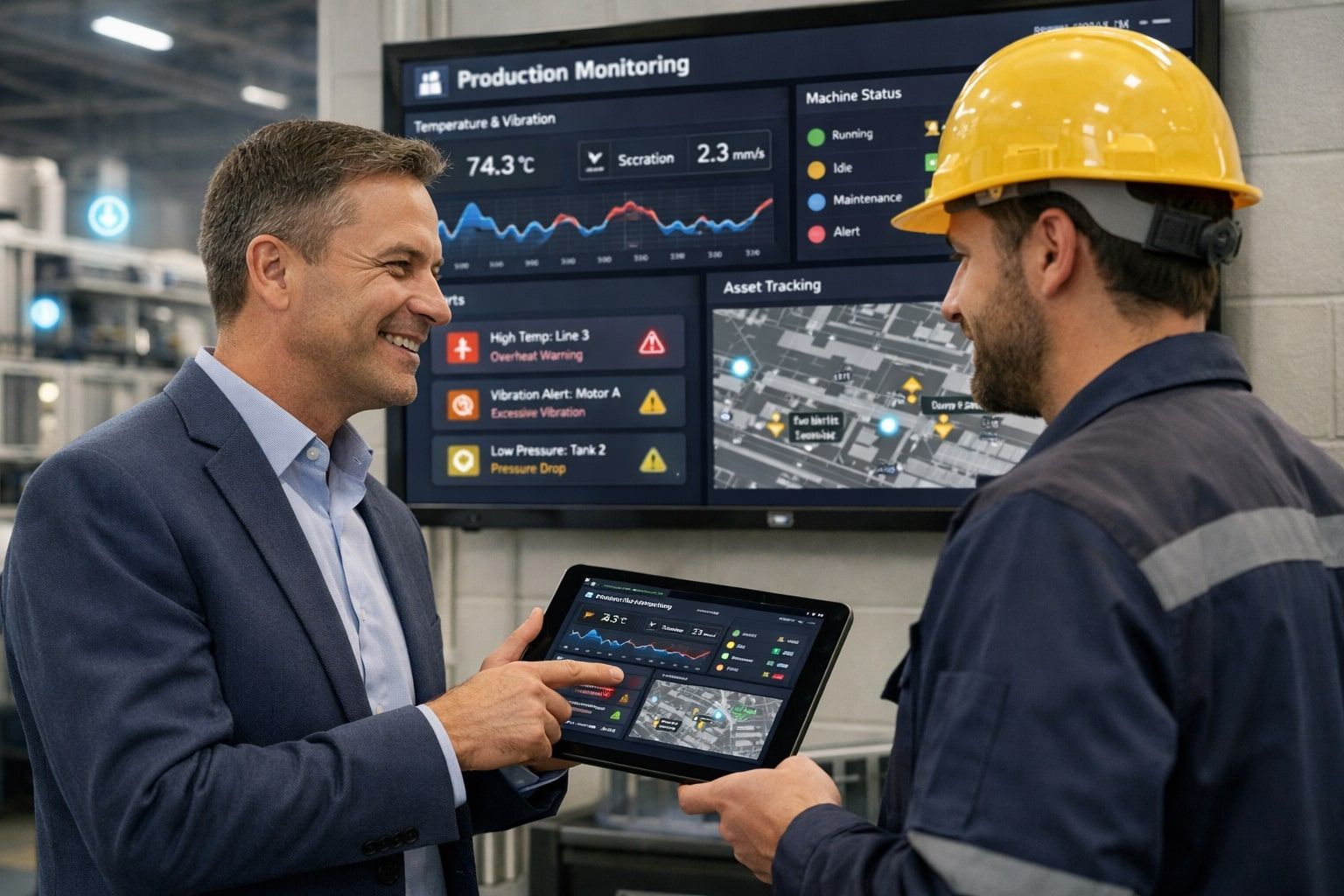
Operational issues rarely announce themselves politely. A machine overheats in the middle of the night. Network connectivity drops in a remote site. Temperature changes slowly damage sensitive inventory before anyone notices.
For many teams, operational monitoring still relies on periodic checks, manual logs, and delayed reports. By the time a problem is visible, the damage is already done. This reactive approach creates daily frustration, unnecessary downtime, and constant pressure to “catch up” instead of staying ahead.
That’s exactly why IoT Solutions are becoming essential. They shift monitoring from reactive to proactive, helping teams see what’s happening right now and respond before small issues turn into costly disruptions.
What Are IoT Solutions in an Operational Context?
In an operational context, an IoT (Internet of Things) solution acts as a connected nervous system for physical assets. It is a network of sensors, devices, and machines that collect and exchange real-time data over the internet. These are not simple gadgets; they are intelligent data points that capture precise information on performance, condition, and environment.
A complete system integrates critical layers. Sensors and devices gather raw data, which is transmitted via a connectivity network to a central platform. This platform aggregates and analyzes the information, transforming it into actionable insights. These insights are then delivered through an action interface, such as dashboards or automated alerts, enabling informed decisions or triggering immediate responses.
Practical Ways IoT Solutions Improve Operational Response
1. From Reactive Fixes to Preventive Action
IoT Solutions help teams move toward preventive action by continuously capturing operational data and identifying patterns over time. Subtle changes, such as gradual increases in vibration or temperature, can signal early signs of wear before disruptions occur. With this visibility, teams can plan maintenance at the right moment instead of responding under pressure. The result is smoother operations, less downtime, and assets that last longer because issues are addressed before they escalate.
2. Smarter Resource Allocation
Accurate, real-time data allows teams to allocate resources with greater precision. Staff and maintenance efforts can be directed to areas where issues actually occur, rather than spread evenly based on assumptions. Work schedules become more informed and purposeful, helping teams reduce unnecessary effort while improving overall efficiency. Over time, this leads to lower operational costs and a more balanced workload across teams.
3. Consistent Monitoring Across Remote Locations
IoT Solutions make it easier to maintain consistent monitoring across multiple and remote locations. Sensors and connected devices continuously report conditions, even in environments with limited connectivity. This enables organizations to apply the same monitoring standards across factories, branches, warehouses, and field sites without relying on constant on-site supervision. As a result, teams gain reliable visibility and faster response capabilities wherever operations take place.
Explore more: Before the Alarm Rings: How Predictive Monitoring Turns Data into Early Warnings
IoT Solutions in Everyday Operational Scenarios
IoT solutions prove their value through practical, measurable improvements in key operational areas.
1. Manufacturing and Industrial Operations
Here, IoT sensors directly combat unplanned downtime. By continuously monitoring machine health through metrics like vibration and temperature, these systems detect early signs of wear or failure. This enables predictive maintenance, allowing teams to schedule repairs before a breakdown happens. The result is a significant reduction in costly production stops and a clear boost in overall equipment efficiency.
2. Logistics and Warehousing
In logistics, IoT provides essential visibility and control. Environmental sensors track conditions like temperature and humidity for sensitive goods, while GPS and RFID monitor asset location in real time. This allows teams to receive instant alerts for deviations, enabling swift action to protect inventory from spoilage and to address shipping delays proactively, ensuring a more reliable supply chain.
3. Banking and Critical Infrastructure
For sectors demanding high reliability, IoT enables continuous remote monitoring. Sensors oversee the status and environment of critical assets like ATMs, branches, and data centers. This system provides early warnings for potential service disruptions, security issues, or compliance risks, allowing institutions to prevent problems and maintain uninterrupted, secure operations.
See also: Improving ATM Security with AI Dwell Time
How AssistX Supports Smarter Operational Monitoring
AssistX supports smarter operational monitoring through two core IoT-driven solutions, AssistX Vision and AssistX Sense, each addressing different layers of operational visibility. AssistX Sense focuses on real-time condition monitoring using connected sensors to track environmental and equipment signals, helping teams detect changes early and respond with confidence. AssistX Vision complements this by turning cameras into intelligent monitoring tools, using AI-powered visual insights to understand activities, movement, and on-site conditions as they happen.
Together, these solutions give teams a more complete view of operations without adding complexity. Data, alerts, and insights are delivered at the right moment, allowing faster responses and more coordinated actions across locations. The result is an operational flow that feels calmer, more predictable, and easier to manage on a daily basis.
Related article: CCTV Transformation Through AI-Powered Technology: Revolutionizing Surveillance