The Hidden Power of AI Semantic Understanding for Smarter & Faster Decision Making
Every day, enterprise teams face that all too familiar struggle: huge mountains of documents, endless information threads, and the constant pressure to make rapid decisions.

Every day, enterprise teams face that all too familiar struggle: huge mountains of documents, endless information threads, and the constant pressure to make rapid decisions—even when the necessary data feels scattered, messy, or totally incomplete. It's not that your team lacks information; the problem is they simply lack real, unified understanding.
And that, honestly, is the true pain point. Data is everywhere, but extracting the actual meaning is incredibly difficult. Teams end up spending frustrating hours searching, cross-checking, and manually interpreting documents. Even worse, different people often read the exact same document and walk away with completely different conclusions. It’s frustrating, it drastically slows down momentum, and it silently drains your team’s productivity.
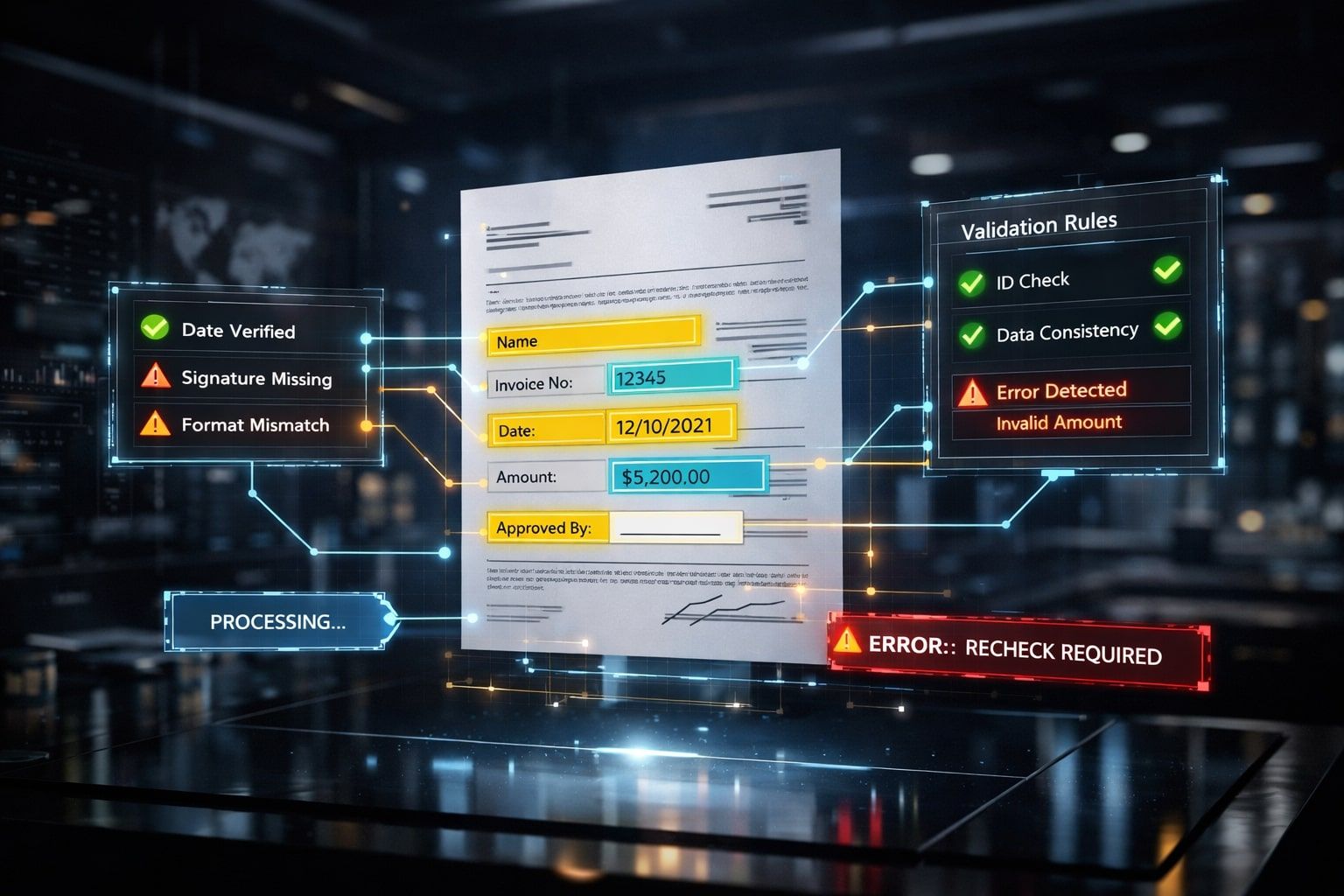
This is exactly the gap AI Semantic Understanding steps in to fill. Instead of treating your information as isolated pieces of text, it interprets the full context, intent, and relationships behind your data. This insight helps your teams make decisions that are smarter, faster, and far more confident across the board.
See also: The Future of Document Smart Processing: AI-Driven Efficiency and Automation
What AI Semantic Understanding Really Means?
AI Semantic Understanding is a necessary breakthrough, shifting us away from frustrating keyword-based search. This semantic AI technology gives systems the crucial ability to truly grasp the full context and deep meaning behind human language. It moves past simple word matching to interpret ideas, understand complex conceptual relationships, and discern real intent. This capability is what transforms your static data into a dynamic, intelligent web, instantly providing the clarity you need.
The immense, practical power of this semantic understanding in AI lies in its application. Through advanced AI semantic processing and analysis, it acts as the smart consultant your team relies on. It instantly connects disparate ideas across all your unstructured information. By delivering insights based purely on meaning, not surface vocabulary, this technology enables faster execution and more confident, data-driven decisions. That feeling of relief from having reliable context at your fingertips? That’s the immediate, undeniable benefit
How Does AI Semantic Understanding Actually Work?
You might be wondering how this magic happens. How can a machine truly "understand" meaning? Semantic understanding is a sophisticated layer of Natural Language Processing (NLP) that moves beyond grammar to grasp intent and context. It’s what separates a simple pattern-matching tool from a genuine intelligence engine.
At its core, the technology builds a conceptual map of your information. It doesn't just see words; it sees the ideas and relationships they represent. Here’s a simplified look at the machinery behind the curtain:
- Contextual Analysis: This is the system's superpower for clarity. It examines the surrounding words and sentences to determine the precise meaning of any given term, ensuring that the same word is interpreted correctly based on its specific usage.
- Semantic Models & Knowledge Graphs: The AI is trained on vast datasets using techniques like word embeddings (which map words with similar meanings close together in a mathematical space) and builds ontologies (frameworks that define the relationships between concepts). This creates a rich, interconnected web of knowledge, allowing the system to understand how ideas link together.
- Phrase and Sentence Structure Analysis: It doesn't just look at words in a list. It analyzes the complete structure of phrases and sentences to understand the relationships between subjects, actions, and objects. This allows it to grasp the full meaning of a statement, not just its components.
- Advanced Techniques: Underlying all this are powerful methods like semantic parsing (converting text into a structured, machine-readable format of meaning) and vector space models (representing words and documents as numerical vectors to compare their conceptual similarity).
In practice, this means when you query a system powered by AI semantic processing, it doesn't just hunt for keyword matches. It comprehends the intent of your question, identifies the core concepts you're asking about, and retrieves information that is conceptually relevant, even if it doesn't share the exact terminology you used.
Ralated topic: Optimizing Business Efficiency with Intelligent Document Processing
What Are the Advantages of Semantic Understanding?
1. Smarter Decision-Making
AI Semantic Understanding analyzes context and relationships in data, enabling more accurate and informed business decisions through comprehensive semantic analysis.
2. Maximum Efficiency
This semantic AI technology automates data processing and analysis, significantly reducing manual research time while improving workflow productivity.
3. Deeper Customer Insights
Gain valuable understanding of customer needs and sentiments through advanced semantic processing that interprets nuance and intent.
4. Competitive Advantage
Transform your unstructured data into strategic assets, uncovering hidden opportunities and driving innovation faster than competitors.
5. Future-Ready Operations
Build scalable knowledge systems that continuously learn and adapt, ensuring your organization stays ahead in evolving markets through intelligent semantic understanding.
Where AssistX Suite Transforms Your Workflow
This is exactly where the AssistX Suite completely transforms your day-to-day work. It doesn't just sit there; it actively applies AI Semantic Understanding to truly grasp the meaning and context of your data. Think of it: it moves way past basic searching. Instead, it pulls out genuinely actionable insights from all those unstructured documents you have lying around.
What's super helpful is that it can automatically summarize those complex reports for you and compare different pieces of content based on what they conceptually mean, not just based on exact keyword matches. Say goodbye to the manual slog of document analysis!
Essentially, the platform takes all your scattered information and turns it into organized, intelligently searchable assets. It surfaces the precise answers you need, no matter what terminology was used originally. Honestly, it functions like that invaluable, tech-savvy team member who always anticipates what you need next. It’s all about enabling faster, smarter decisions while giving you back a huge chunk of your manual effort. You'll feel that sense of relief immediately.
Explore more: When Document Overload Slows Productivity: How AI Document Processing Simplifies Access